Trending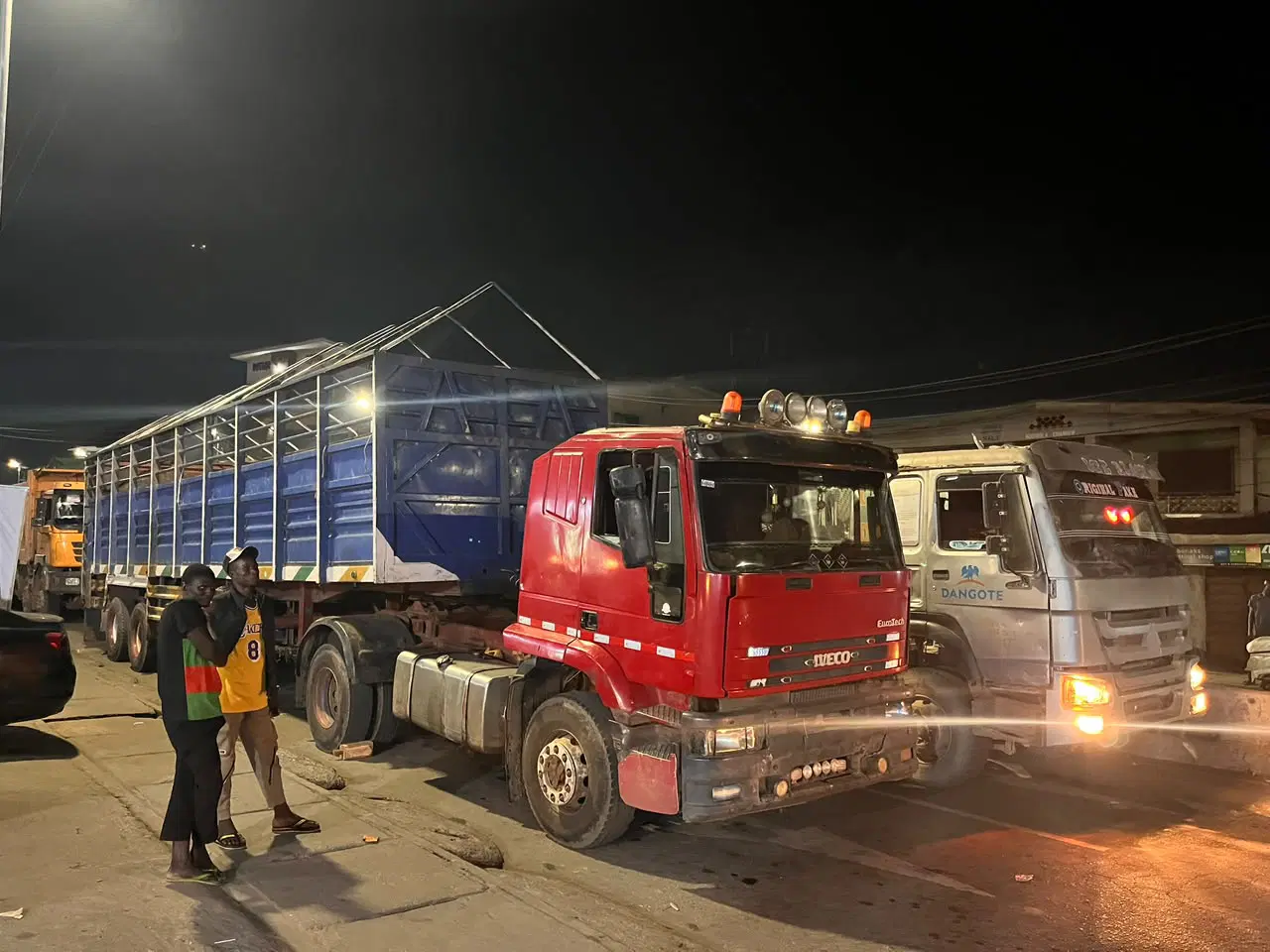
Thousands of motorists and commuters endured a nightmarish journey on the Lagos-Ibadan Expressway, with some spending several hours — and in some cases virtually the entire night — trapped in a massive gridlock triggered by a multiple-vehicle crash at Kara Bridge and compounded by ongoing repair works.
The incident began on Tuesday, September 15, when a 40-foot container truck developed a mechanical fault and crashed into six other vehicles, according to the Lagos State Emergency Management Agency (LASEMA). No deaths or injuries were recorded.
The seven vehicles involved included the container truck, a Toyota Hilux, an interstate bus, Hyundai Odyssey, Toyota Sienna, Toyota Highlander and Mitsubishi Hilux. Emergency responders were dispatched following a distress call at about 6:05 a.m.
The crash occurred at an especially difficult time because rehabilitation work was already underway on the Kara Bridge expansion joints, reducing available road space. The Federal Government’s two-week rehabilitation project began on September 8 and had already caused significant congestion before Tuesday’s accident.
As the crash blocked movement and queues grew, congestion spread beyond the Long Bridge towards Magboro and eventually extended deep into Lagos. Some motorists reported being trapped for between six and 14 hours.
The situation became even worse when frustrated drivers began travelling against traffic in an attempt to escape.
According to motorists and traffic officials, vehicles driving the wrong way occupied several lanes and eventually created another major obstruction for motorists travelling towards Lagos. At the OPIC axis, drivers attempting to return to the proper carriageway contributed to another bottleneck.
By Tuesday evening, traffic disruption had spread significantly. PUNCH reported that congestion had extended towards Iyana-Oworo, with slow movement also affecting the Third Mainland Bridge. Another accident around the Kara axis later in the day added to the difficulties.
For some commuters, what would normally have been a short journey became an extraordinary ordeal. Channels Television reported the experience of one motorist who said a journey that ordinarily took about 15 minutes turned into seven hours, forcing him to seek a hotel rather than continue home.
The gridlock also triggered a sharp increase in transportation fares.
According to PUNCH, fares from Iyana-Oworo to Berger reportedly jumped from the normal ₦500–₦700 range to ₦2,000, while commuters travelling from Iyana-Oworo to Mowe were reportedly charged as much as ₦3,000 instead of about ₦1,200.
The latest disruption highlights the vulnerability of the Lagos-Ibadan Expressway — one of Nigeria’s most important transportation corridors — whenever road repairs, crashes, broken-down heavy-duty vehicles and indiscipline by motorists occur simultaneously.
The Kara Bridge rehabilitation itself is intended to replace deteriorating expansion joints and improve the bridge’s structural integrity and long-term safety. However, the reduced carriageway created by the repairs means that even a single accident can have consequences stretching kilometres in both directions.
The incident therefore raises a larger infrastructure and traffic-management question: Should major repairs on one of Nigeria’s busiest highways proceed without stronger contingency measures capable of preventing a single crash from leaving thousands of commuters trapped for an entire day and night?