Trending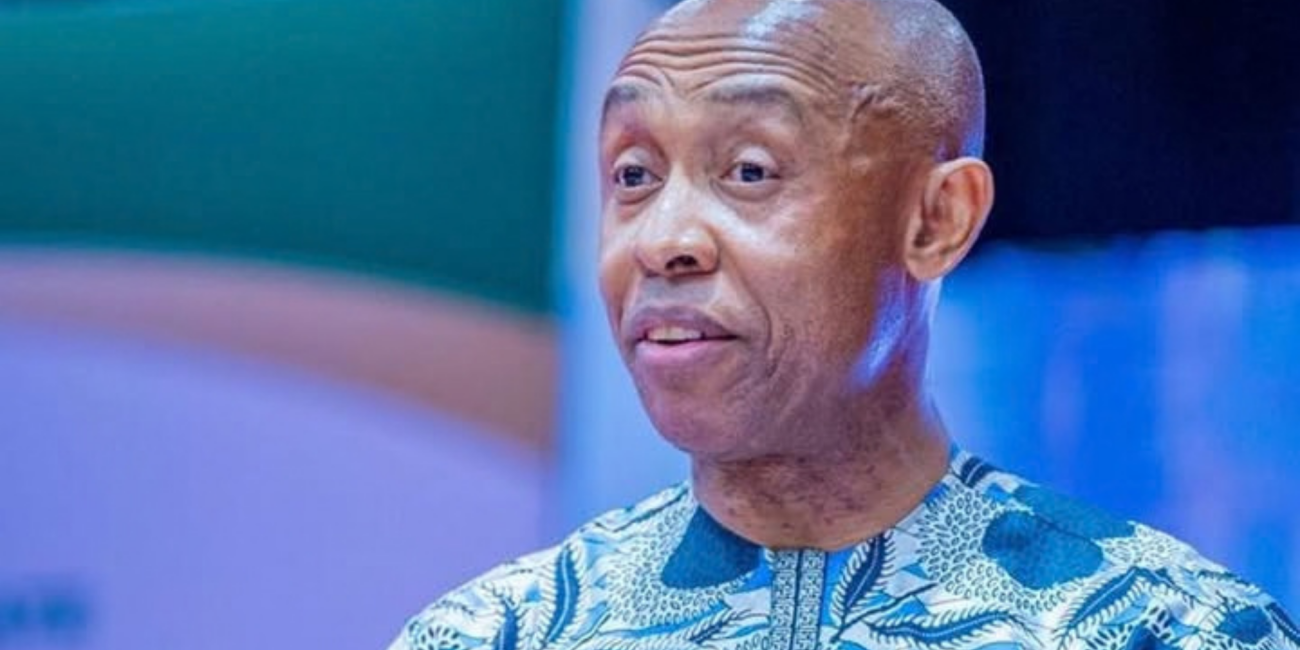
Former Chairman of the National Human Rights Commission (NHRC), Prof. Chidi Anselm Odinkalu, has raised concerns about the growing influence of Nigerian courts over electoral outcomes, arguing that judicial decisions are increasingly determining who occupies political office rather than leaving the ultimate choice to voters.
Odinkalu made the remarks in Lagos while delivering the keynote address at the third Tunji Braithwaite Symposium, themed “The Judiciary and Electoral Integrity: Safeguarding Free, Fair, and Credible Elections for Democratic Consolidation.”
According to the human-rights lawyer, courts have a legitimate constitutional responsibility to resolve electoral disputes, but Nigeria’s election jurisprudence has evolved in ways that, in his view, give judges increasingly decisive influence over political mandates.
“The courts have progressively taken away from voters the power to determine who wins elections,” Odinkalu said.
He argued that this development raises fundamental questions about popular sovereignty — the democratic principle that political authority ultimately derives from citizens.
Odinkalu described judges as increasingly becoming arbiters of political outcomes, arguing that some election disputes now effectively move the final decision over political office from the ballot box to the courtroom. This represents Odinkalu’s assessment of Nigeria’s electoral jurisprudence, rather than an established finding that courts generally act improperly when resolving election cases.
From Ballot Box to Courtroom
Odinkalu pointed to several controversial electoral cases since Nigeria’s return to civilian rule in 1999.
Among the examples he cited was the 2007 Rivers State governorship dispute involving Rotimi Amaechi.
Amaechi had won the Peoples Democratic Party governorship primary but was replaced by Celestine Omehia before the election. After Omehia won and assumed office, the Supreme Court ruled that Amaechi’s substitution was unlawful and subsequently installed Amaechi as governor, although his name had not appeared on the ballot.
Odinkalu argued that the decision became an important turning point in the relationship between party disputes, elections and judicial power.
He also referenced the 2019 Zamfara elections, where the Supreme Court invalidated APC candidates’ victories over defects arising from the party’s nomination process, as well as electoral litigation arising from Plateau State in 2023.
His concern is not that courts should stop resolving election disputes. Rather, he argued that when an election is invalidated, the preferable reform would be to return the decision to voters through another election, instead of having judicial decisions result in another candidate assuming office.
Odinkalu Questions the “Go to Court” Culture
The former NHRC chairman also criticised the political use of the phrase “go to court.”
Ordinarily, he said, going to court should represent peaceful reliance on the rule of law. But he argued that the expression has increasingly acquired another political meaning — suggesting that the battle for political power can continue through litigation after voting has ended.
The scale of election litigation formed another part of his argument.
Odinkalu cited figures indicating that 3,312 election petitions were filed over six general-election cycles between 2003 and 2023: 62 in 2003, 748 in 2007, 483 in 2011, 533 in 2015, 543 in 2019 and 943 following the 2023 elections. Those figures exclude pre-election and other politically related litigation.
Retired Appeal Court Justice Raises Similar Concern
Odinkalu’s concerns were echoed at the symposium by retired Court of Appeal Justice Oludotun Adefope-Okojie, who criticised situations in which electoral outcomes are overturned because of legal technicalities.
She argued that while courts remain essential to electoral justice, judicial processes should preserve the expressed will of voters wherever the law permits.
Odinkalu’s proposed solution is therefore not the removal of judicial oversight. He called instead for electoral and judicial reforms that preserve access to the courts while ensuring that voters retain the final role in choosing their representatives.
His argument comes as Nigeria approaches the 2027 general elections, when disputes over party nominations, candidate eligibility, election procedures and declared results could again place the judiciary at the centre of the electoral process.
The debate presents a fundamental constitutional question ahead of 2027: when a serious electoral violation requires judicial intervention, how should Nigeria balance enforcement of electoral law with the votes already cast by citizens?