Trending
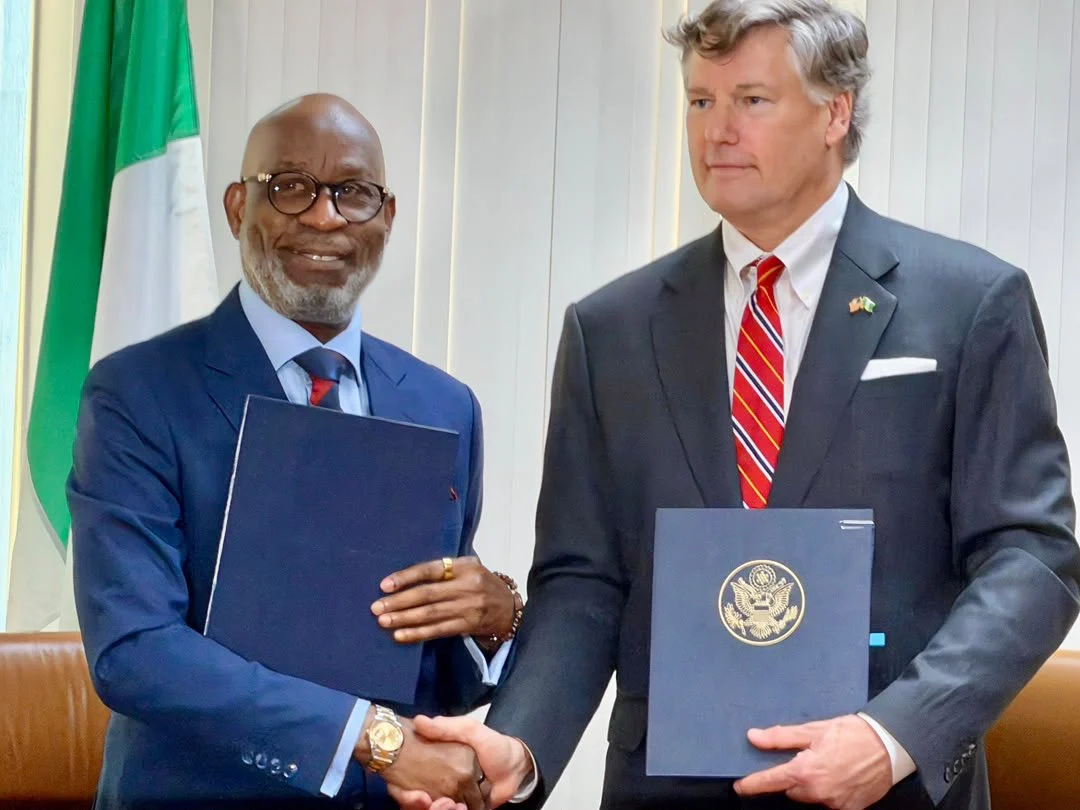
Nigeria and the United States have signed a major agreement aimed at deepening American investment in Nigeria’s mining industry and accelerating the development of the country’s vast solid mineral resources.
The agreement was signed in New York by Nigeria’s Minister of Solid Minerals Development, Dele Alake, and US Deputy Secretary of State Christopher Landau, on the sidelines of the 81st United Nations General Assembly.
Under the framework, both countries will cooperate in key areas including geological data and exploration, mineral development and processing, infrastructure development and technical capacity building.
The Federal Government estimates Nigeria’s mineral resources at about $700 billion, although that figure represents a government estimate of resource potential rather than the value of confirmed investment arising from the new agreement.
Alake said Nigeria wants the partnership to go beyond the traditional model of extracting and exporting raw minerals. The government is seeking greater domestic processing so that more economic value, employment and technical expertise remain within Nigeria.
“Nigeria cannot remain a source of raw materials while others capture most of the value,” Alake said, adding that the country wants stronger local processing, quality jobs, improved skills and greater opportunities for Nigerian businesses.
The agreement is also significant amid growing international competition for critical minerals, which are increasingly important for technologies including electric-vehicle batteries and renewable-energy infrastructure. Nigeria has attracted particular foreign interest in its emerging lithium industry.
According to Alake, the next stage will involve identifying viable projects and transforming the framework into actual investments and commercial partnerships.
US Deputy Secretary of State Christopher Landau described the agreement as a demonstration of strengthening ties between Washington and Abuja, saying the United States wants to support Nigeria’s economic growth.
For Nigeria, attention will now turn to implementation — particularly whether the agreement translates into new mining projects, processing facilities, technology transfer, infrastructure and jobs rather than remaining primarily a diplomatic framework.