Trending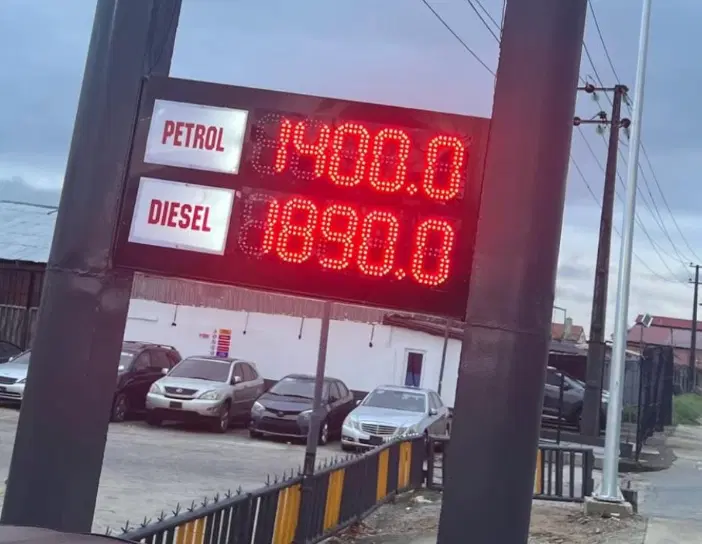
The price of Premium Motor Spirit (PMS), commonly known as petrol, has risen again across parts of Nigeria, piling fresh pressure on households, transporters and businesses already struggling with high operating and living costs.
Checks at filling stations showed that some major marketers have adjusted pump prices to as high as ₦1,400 per litre, while other outlets that previously sold petrol at about ₦1,300–₦1,360 per litre have also increased their prices.
The latest increase comes amid renewed pressure from the international oil market, where higher crude prices have pushed up the cost of petroleum products. Global energy markets have faced significant volatility in 2026, with geopolitical disruptions contributing to higher crude and fuel prices.
For Nigerian households, however, another petrol increase goes far beyond the filling station.
Millions of Nigerians depend on petrol directly or indirectly for transportation, electricity generation and small-scale businesses. Consequently, higher pump prices can quickly feed into transport fares, food distribution costs and the prices of everyday goods and services.
Small businesses are particularly exposed. Barbers, restaurants, shops, pharmacies, cybercafés, small manufacturers and other enterprises that rely on petrol-powered generators may face higher operating expenses, especially where grid electricity remains unreliable.
Transport operators are also likely to feel the impact. Commercial drivers who spend more on fuel may attempt to transfer the additional cost to passengers through higher fares, creating another layer of pressure on workers and families.
The development is especially significant because petrol prices in Nigeria are now largely determined by market conditions following the removal of the longstanding fuel subsidy and the liberalisation of the downstream petroleum sector.
Marketers have recently warned that rising depot prices could eventually translate into further increases at filling stations. Reports earlier in September showed depot prices climbing to around ₦1,290 per litre, raising fears that retail petrol prices could approach or exceed ₦1,400.
Nigeria’s situation presents a difficult paradox: the country remains a major crude oil producer, yet international crude price increases can still translate into higher domestic fuel costs because crude prices, refining economics, foreign exchange, transportation and other market variables influence the final pump price.
The wider economic consequences could be substantial. Higher energy costs generally contribute to inflation by raising transportation, logistics and production expenses, while simultaneously reducing the purchasing power of households.
For businesses already dealing with expensive electricity, financing and transportation, another round of fuel increases could force some operators to raise prices, reduce working hours, cut costs or pass additional expenses to consumers.
The latest hike therefore brings Nigeria’s fuel-price debate back to a fundamental question: How long can households and small businesses continue absorbing repeated increases in the cost of energy without corresponding improvements in income and purchasing power?